
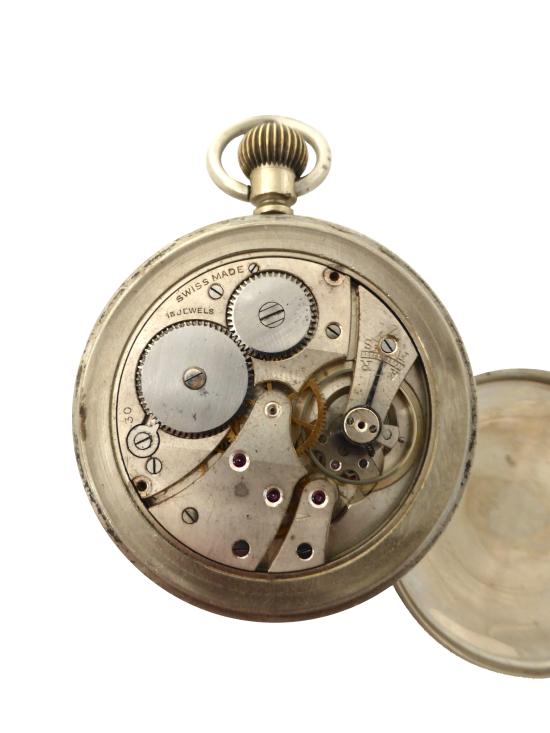
WW2 Royal Navy Pattern 300 Pocket Watch
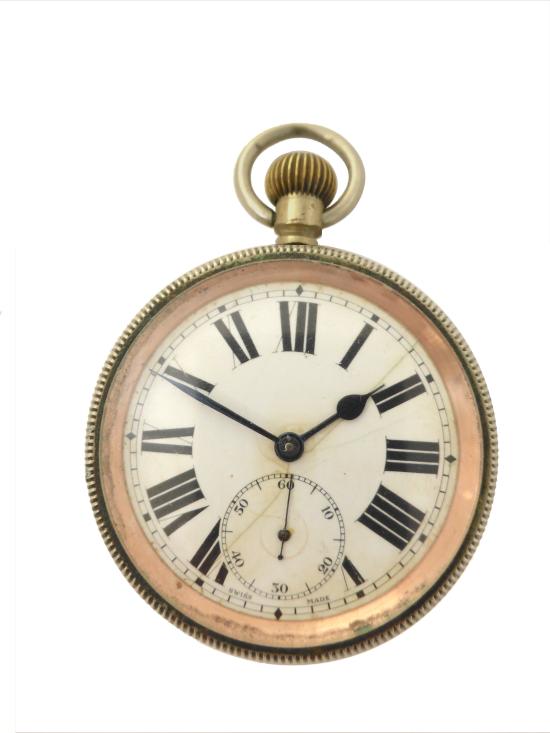
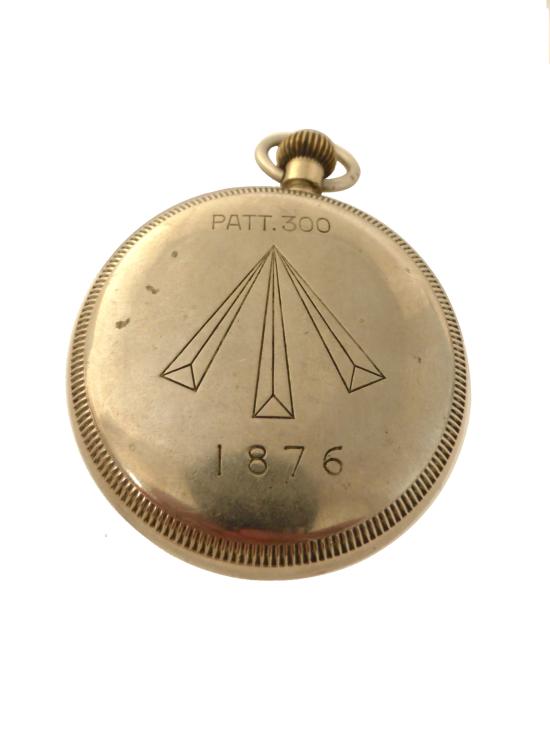
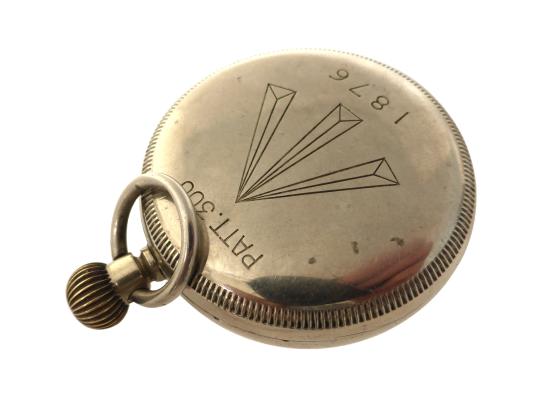
A genuine Admiralty Pattern 300 pocket watch, c.1940, despite its battle-scarred appearance.
The Admiralty Pattern 300 is a favourite among military watch collectors, but its precise purpose has eluded historians, although clues and anecdotes exist that may help define this watch's wartime roles. To that end, some of what I now know about this watch is shared here.
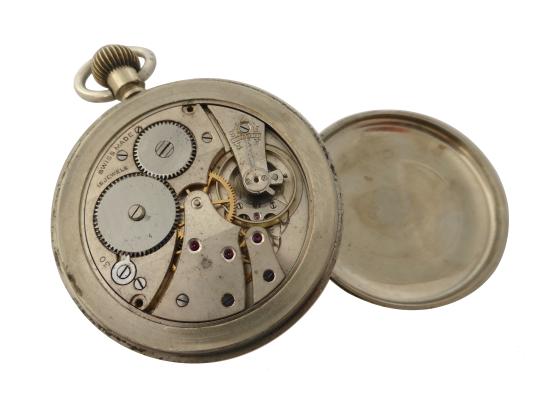
AP300 watches are robust in design, featuring a three-piece heavy-duty case that provides at least some degree of hermetic protection, while holding a 15-jewel Swiss Revue Thommen (Vertex) or Aristo movement. Interestingly, identical Vertex watches were also trusted by British railway companies in the days of steam locomotives. No doubt, given the high number of "Revue 30" watch movements procured by the armed forces, it would be reasonable to assume that these were regarded as a "value for money" workhorse movement. Perhaps this was indeed a serious consideration, especially if the AP300s were to face hazardous working environments that would quickly destroy other timepieces. Today, many examples of the ubiquitous GSTP watches can be found and even the HS3 deck watches would appear to be plentiful, but the AP300 watches, while not rare, only turn up in smaller numbers at collectors' markets.
Fascinatingly, on Tapatalk, a contributor posted an Admiralty document from 1941, identifying the AP300 as a dedicated "Charthouse" watch.
Admiralty Order 2527 states,
"It has been decided to supply a less expensive timepiece for use in the charthouse, and in future, Pattern 300 complete with case, Pattern 302, will be supplied in lieu of the charthouse clock, Pattern 307."
However, at this early point in the war it was Royal Navy practice for only the larger Royal Navy ships and submarines to have a dedicated Charthouse/Chartroom. Medium and small naval vessels typically had to share space before they acquired the new Decca Navigation system rolled out towards the end of WW2.
Both Revue Thommen and Aristo supplied unbranded AP300 watches during the early war years. This was possibly due to the Swiss' concern of nazi retribution for assisting the Allies. After all, they were supposed to be neutral. Fortunately, Revue, having established the Vertex watch company in England during the Great War, were in a better position to cautiously facilitate the supply of their movements to their partner overseas.
Thinking about the kind of maritime demand for tactical watches that existed, such as in the Atlantic convoy routes, it comes as no surprise that the Swiss company, "Aristo", also took logistical steps to open a watch agency in the USA. Calling itself the "Aristo Import Co", this agency was connected to the original Swiss house, continuing to trade watch goods with America. To identify those watches that came to the RN via the USA route, those watches have their cases marked as supplied by the "Aristo Import Co" and may also show the tiny lettering of "AXA" engraved on the balance bridge. These letters simply mean that import taxes have been paid by Aristo @ Aristo Import Co. but importantly, they also identify the machinations of the watch industry and a country's government as they go about business during war.
Furthermore, during conversations with the Combined Ops Pilotage Parties museum, it came to light that reports show their personnel carried AP300 pocket watches on missions. COPPists, as they were routinely called, were responsible for reconnoitring enemy coastlines by kayak and, as a secondary objective, were responsible for acts of sabotage around ports... All very "Cockleshell Heroes". Such clandestine operatives typically arrived by submarine before setting off in their kayaks, so perhaps they too discovered the benefits afforded to them by the AP300 watch. Only other postwar documents that I have mentioned the GSTP as being the type used by COPP, or perhaps they used both.
Linked to the AP300, a near-identical watch exists in the Royal Navy's inventory. Designated as the HS5, this watch is listed for use by "Survey Vessels" and differs only by dial configuration, where Arabic numerals are used instead of Roman. Another close relation to the AP300 was the AP301, a Helvetia pocket watch equipped with strap lugs and designed for wrist wear. But that's another story.
I hope that the information about these very solid watches provokes some thought as the jury debates whether or not these are submariner's watches. Well, certainly the information from the COPP Museum would say that at least some of them served with COPPists and on subs, possibly even on X-Craft midget subs. If you have any further information on the subject of the AP300, I would be delighted to hear from you.
I am happy for readers to share the information that I have written, but if you do, please at least acknowledge the source of my comments. It inspires historians to put in the time and effort, while also remembering those who did the hard wartime work.
Code: 51768